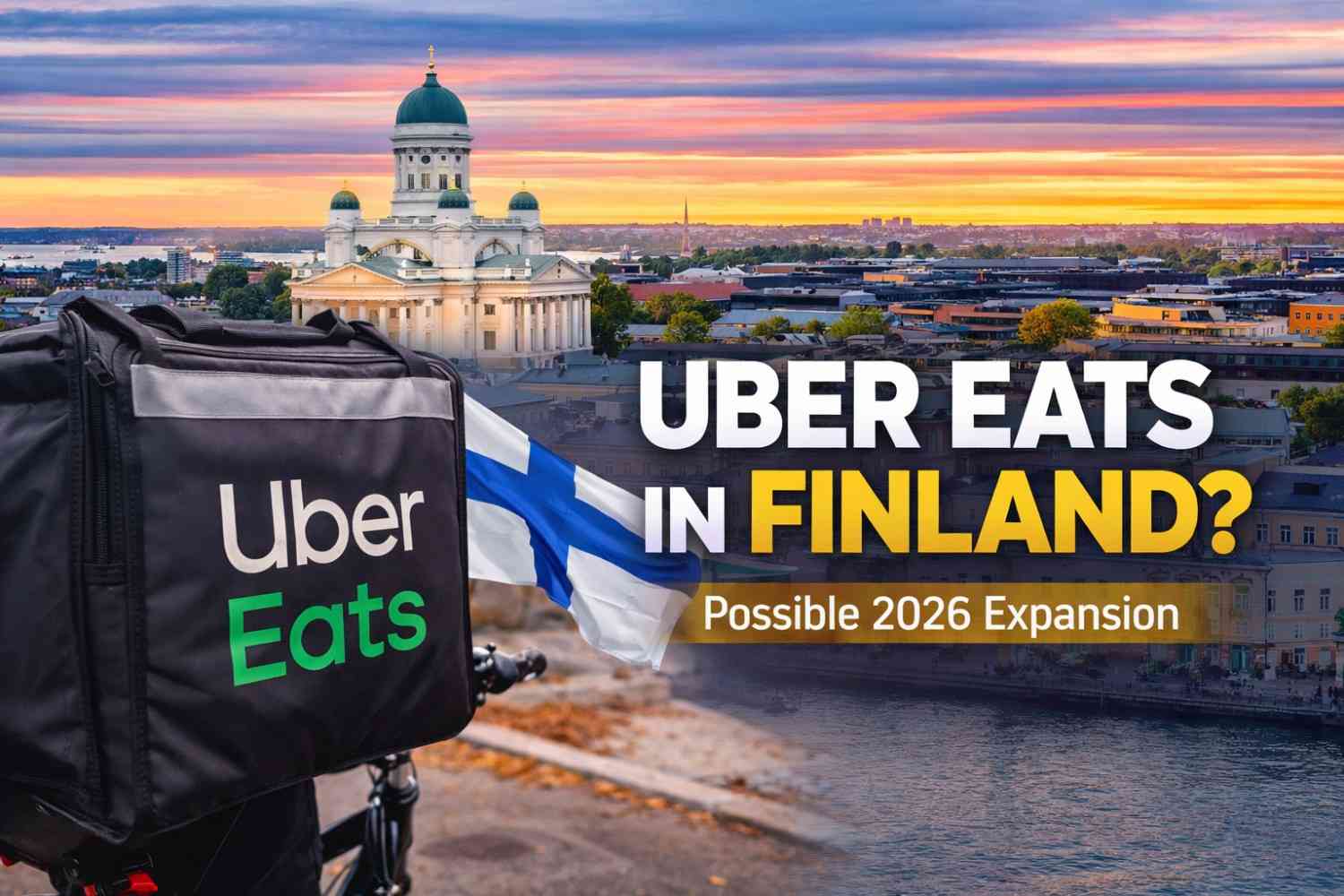
Uber Eats may soon become a real option in Finland’s food delivery scene. Over the past few days, multiple reputable outlets have reported that Uber plans to expand its food-delivery business into seven new European markets in 2026 – including Finland.
If you’ve been seeing people search phrases like “uber eats finland,” “uber eats helsinki,” “uber eats delivery partner,” and “uber eats finland application,” you’re not imagining it. Interest is rising fast, largely because the news landed right when Finland’s delivery market is already changing.
This article breaks down everything that’s publicly known so far, what’s still unconfirmed, and what to watch next-whether you’re a customer, a restaurant owner, or someone hoping to work as a delivery partner.
Quick summary: the key points
- Uber plans to expand its delivery operations into seven new European markets in 2026, including Finland.
- Reported new markets include Austria, Denmark, Finland, Norway, Czech Republic, Greece, and Romania.
- Uber expects this expansion to add about $1 billion in gross bookings over the next three years.
- Uber leadership has indicated they’re intentionally entering markets with strong existing competitors, implying they want to “shake things up.”
- A specific Finland launch date, cities, and operating model are not yet fully detailed publicly in the reporting we’ve seen (e.g., whether it starts in Helsinki only, whether it expands to other cities quickly, etc.).
This video explain the Uber Eats coming to Finland and seven other Eu Countries:
What exactly has been reported about Uber Eats coming to Finland?
1) Uber’s 2026 expansion plan includes Finland
Reuters reported that Uber plans to expand its food-delivery business into seven new European markets in 2026, and Finland is named among them.
Yle (Finland’s public broadcaster) also reported—citing the Financial Times—that Uber Eats intends to launch in seven European countries, including Finland, during 2026.
These are the most credible public signals so far because they come from large, established news organizations (and in Reuters’ case, includes comments attributed to an Uber spokesperson).
2) The seven countries have been named in multiple reports
Several reports list the same set of seven countries for the 2026 rollout. A common list includes:
- Austria
- Denmark
- Finland
- Norway
- Czech Republic
- Greece
- Romania
This list appears in Finnish media summaries and other coverage referencing the same reporting.
3) Uber is aiming for a big financial lift from this expansion
The expansion isn’t being framed as a “small experiment.” Uber estimates the move could generate an additional $1 billion in gross bookings over the next three years.
This matters because it suggests Uber is likely to invest seriously in the launch—marketing, restaurant partnerships, consumer incentives, and delivery-supply growth—rather than doing a quiet rollout that stays tiny.
4) Uber expects to compete head-on with established players
Yle reported that Uber’s spokesperson (Susan Anderson, per the story) told the Financial Times that Uber looks forward to entering markets where established competitors are already present.
That statement is important because Finland isn’t an empty market. It’s a competitive place where consumers already have delivery habits—and where delivery workers already have platform preferences.
Why the timing matters: Finland’s delivery market is in motion
One reason this story gained momentum is the context: Foodora announced it would exit Finland, and the Uber Eats report surfaced around the same period. A Helsinki Times summary framed Uber Eats’ possible entry as coming after Foodora’s exit announcement, describing Finland’s market as one where Wolt is the market leader.
When a major delivery operator leaves, two big questions instantly pop up:
- Who fills the gap for consumers and restaurants?
- Where do couriers/drivers go next?
So when Uber Eats is mentioned as “coming,” it naturally triggers a surge in searches like:
- “uber eats finland”
- “uber eats delivery partner”
- “uber eats finland application”
- “uber eats helsinki”
- “uber eats suomi”
It’s not only curiosity—it’s people looking for the next move.
Is Uber Eats definitely launching in Finland, or is it still “planned”? Based on what’s publicly available right now, the most accurate phrasing is:
Uber Eats is reported to be planning a 2026 launch in Finland as part of a wider European expansion.
What we do have:
- Named countries (Finland included) in credible reporting.
- A 2026 timeframe tied to the expansion plan.
- A stated growth target ($1B gross bookings) and strategic intent to compete in established markets.
What we don’t have in those reports:
- An official public Uber Eats Finland “launch date” page (at least not referenced in the above coverage).
- Confirmed launch cities (Helsinki vs. nationwide).
- Detailed courier model for Finland (exact onboarding requirements, whether they will require a business ID, etc.).
So: it’s not “random rumor,” but it’s also not a fully detailed public rollout plan yet.
What could Uber Eats’ entry mean for delivery jobs in Finland?
This is the part many immigrants and international students care about.
If Uber Eats launches in Finland, the immediate impact usually falls into three areas:
1) More delivery opportunities (especially during ramp-up)
A new delivery platform typically needs to scale fast:
- enough restaurants
- enough consumers
- enough couriers to keep delivery times reasonable
That ramp-up phase can create a burst of opportunities—especially in major cities—because the platform must avoid long delays that drive customers away.
2) Increased competition could improve conditions (but not guaranteed)
When platforms compete, they often compete on:
- delivery fees and promos for customers
- restaurant commission structures
- courier incentives and availability
Uber leadership has hinted they want to “raise the bar” in markets with established competitors.
That could translate into better incentives at launch—especially if Uber wants to quickly gain market share. But it’s important to be realistic: incentives can be strong during launch and then normalize later.
3) More choice for workers
In a market dominated by one major player, couriers can feel locked into one system. A second major player can give workers more flexibility—switching depending on:
- peak times
- incentive structures
- app reliability
- distance patterns
- customer density
Even if Uber Eats doesn’t immediately “create jobs for everyone,” it can create more options and reduce dependency on a single platform.
What might this mean for customers and restaurants?
For customers
If Uber Eats arrives, customers could see:
- more restaurant selection (if Uber signs different partners)
- launch promotions
- potentially faster service in areas where the current market is overloaded
But customer experience will depend on whether Uber launches in just one city first (like Helsinki) or multiple regions, and how quickly they build courier supply.
For restaurants
Restaurants care about:
- commission rates
- marketing visibility
- operational integration (tablets, POS integrations, logistics)
- customer acquisition
In competitive markets, restaurants sometimes benefit because platforms compete for exclusives or better terms. However, restaurants also worry about margin pressure if multiple platforms take high commissions.
What about Helsinki, Rovaniemi, and the rest of Finland?
A lot of people search “Uber Eats Helsinki” and even “Uber Eats Rovaniemi.” That makes sense: Helsinki would be the obvious first launch city because of population density and ordering volume.
But right now, the credible reporting doesn’t confirm launch cities publicly—only that Finland is among the markets.
A realistic expectation
If Uber Eats follows a typical pattern, it may:
- launch in the largest metro area first (often Helsinki region)
- expand to other large cities next
- evaluate smaller markets based on order volume and courier supply
For a city like Rovaniemi, a launch is possible in the long run, but it would likely depend on demand density, restaurant participation, and seasonality (tourism peaks could matter). That’s not a promise—just how these rollouts often work.
How to prepare if you want to become an Uber Eats delivery partner in Finland
Because there’s no fully published Finland-specific onboarding guide in the reporting above, the best approach is preparation + monitoring.
Here’s what you can do now:
1) Get your basics in order
Delivery platforms commonly require:
- legal right to work in Finland
- a smartphone with reliable data
- a bike/car/scooter depending on the city and model
- basic documents and tax setup (varies by country and platform)
2) Watch for official Uber Eats Finland pages or announcements
When a market launch becomes real, you typically start seeing:
- local landing pages
- restaurant partner sign-up pages
- courier onboarding pages
- app store listings for local market settings (though apps are usually global)
3) Don’t fall for fake “applications”
Whenever a big brand is rumored to enter a market, scammers try to exploit it with:
- fake courier “application fees”
- WhatsApp groups claiming to “register you”
- sketchy recruitment agencies
A legitimate platform does not need you to pay a random person to “put your name.”
Will Uber use robots or drones in Finland?
Not specific to Finland yet—but it’s part of Uber’s broader direction.
Reuters has reported Uber expanding automation partnerships in Europe, including robot deliveries (in other markets) and plans to expand such services.
That doesn’t mean Finland will immediately get robot deliveries. It just shows Uber is actively investing in delivery automation alongside regular courier networks.
FAQ
Is Uber Eats already operating in Finland?
The reporting is about Uber Eats entering Finland as part of the 2026 expansion.
Uber’s ride-hailing presence in Finland has existed in some form, according to coverage summarizing the situation, but Uber Eats is the specific service being discussed here.
When will Uber Eats launch in Finland?
Reports point to 2026 as the rollout year within the wider seven-country expansion plan.
A precise date and first cities have not been clearly published in the sources above.
What cities will Uber Eats start with (Helsinki? Tampere? Rovaniemi?)
Not confirmed publicly in the cited reports.
Helsinki is a common guess, but treat it as a guess until Uber announces specifics.
Will it create “many jobs”?
A large platform entry can increase delivery opportunities, especially during launch and expansion phases. But the total impact depends on how many restaurants join, how many consumers order, and how aggressively Uber invests in the rollout.
What to watch next (signals that a Finland launch is getting real)
If you want to track this story like a pro, watch for these signs:
- Official Uber Eats Finland pages (courier + restaurant)
- Local restaurant partnerships being announced
- Hiring/operations roles posted for Finland (city operations, sales, support)
- App updates referencing Finland in delivery regions
- Finnish-language support or communications starting to appear
Once 2–3 of these show up, it usually means a launch is moving from “planned” to “active rollout.”
Final thoughts
Based on credible reporting, Uber Eats is planning a 2026 expansion into seven new European markets, and Finland is included.
That’s why people are searching “Uber Eats Finland” so heavily – because this isn’t just curiosity. It’s about jobs, competition, and what Finland’s delivery market will look like after a major shake-up.
If you’re an immigrant, an international student, or anyone depending on part-time work, the smartest move right now is: stay informed, prepare your documents, and wait for official onboarding channels to open.